What is Taekwondo?

Master Kim Academy

What is Taekwondo?

Taekwondo is much more than a combat sport. It is a Korean martial art that develops the body, the mind, and the character. Each student progresses at their own pace in a structured, demanding, and respectful environment.

Hangeul 3

MEANING OF THE WORD TAEKWONDO

The word Taekwondo is of Korean origin and is composed of three elements:

TAE (태) : the foot, symbolizing kicking and movement techniques
KWON (권) : the fist, representing hand techniques
DO (도) : the way, the path of life and personal development

Taekwondo is not limited to a set of techniques. It embodies a path of growth, aiming for balance between body and mind.

"The way of the foot and the fist"


"TAEKWONDO IS A SCHOOL OF LIFE"


Two Visions of Taekwondo

TRADITIONAL MARTIAL ART

✓ Real effectiveness
✓ Self-defense
✓ Body control
✓ Mental discipline
✓ Respect and values

COMPETITION SPORT

✓ Points and strategy
✓ Speed
✓ Sport techniques
✓ Official rules
✓ Competitions


BELTS

Taekwondo follows a structured progression through different levels called belts.

Beginner

10 → 7th Keup

Intermediate

6 → 3rd Keup

Advanced

2 → 1st Keup + Dan

View belt and rank details

Discover the complete progression system, from the very first steps to the black belt.

Beginner

In our Academy, children under the age of 8 begin at the 15th keup and learn the Kitcho corresponding to their current grade:

CHILDREN

✔ Beginning of progression from a very young age

✔ Learning Kitcho (fundamental technical basics)

✔ Development of coordination, discipline, and concentration

The Kitcho are essential basic sequences that allow children to build strong foundations before learning poomsae.

CHILDREN (5 to 8 years old)

   Grade     
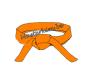
 14th keup

   14th keup    

13th keup

13th keup

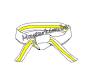
 12th keup

12th keup

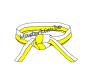
 11th keup

11th keup

 10th keup

10th keup


Intermediate

The grading scale represents 19 levels and students learn the Poomsae:

=> 10 Keup (= grades) : Beginners from age 9 start at 10th Keup and finish at 1st Keup (= Taegyuk Poomsae)

=> 9 Dan (= degrees) : Dan degrees begin with 1st Dan and end with the ultimate 9th Dan. (Advanced Poomsae)

The first Poomsae = Taegyuks


   Grade                                          Symbol
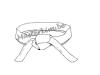
      

 10th keup 10th keup  
9th keup 9th keup

 Heaven

Heaven


Before the black belt : the student progresses through the Keup grades, also known as colored belts.

After the black belt : progression continues through the Dan grades, which correspond to advanced and expert levels.

In our Academy, progression is adapted to the age, level, and journey of each student.

Colored Belts

Progression from beginner to advanced level

Progressive technical development

Learning fundamentals, poomsae, techniques, and discipline

Black Belts (Dan)

Advanced levels of Taekwondo

Long-term progression

Technical requirements, maturity, and continuity

Colored belts (Keup) : progression from beginner to advanced level.

Black belts (Dan) : advanced levels representing mastery and experience.

Progression is adapted to the age, level, and commitment of each student.

Before the black belt

Progressive technical development

Learning fundamentals and poomsae

Development of discipline

Physical and mental growth

After the black belt

Advanced technical development

Mastery of Taekwondo

Long-term progression

Transmission and experience


STUDENT PROGRESSION

CHILDREN / ASPIRANTS

Beginning of progression from a very young age

Learning Kitcho (fundamental technical basics)

Development of coordination, discipline, and concentration

Belts adapted to age and development

The Kitcho are essential basic sequences that allow children to build strong foundations before learning poomsae.

JUNIORS / ADULTS

10 Keup (colored belt grades)

9 Dan (black belt grades)

Progressive learning of Poomsae

Structured and recognized progression

BLACK BELT POOMSAE

1st Dan : Taegeuk + Koryo

2nd Dan : Keumgang

3rd Dan : Taebaek

4th Dan : Pyongwon

5th Dan : Sipjin

6th Dan : Jitae

7th Dan : Cheonkwon

8th Dan : Hansu

9th Dan : Ilyeo


Grade Details

15th to 10th Keup : children’s grades (Kitcho)

10th to 1st Keup : progression of colored belts

1st Dan to 9th Dan : progression of black belts

The Kitcho grades are specifically adapted for children. They provide a gradual and motivating progression by developing technical foundations before advancing to adult belts.

Progression Requirements

Minimum time between examinations

Age requirements

Required technical level


 Yellow = beginning

 Green = progression

 Blue = maturity

 Red = mastery

 Black = expert


Children/Aspirants (5-12 years old)

In our Academy, children begin their progression with colored belts from 15th to 10th Keup, adapted to their age and development.

Juniors/Adults

10 Keup (colored belt grades)

9 Dan (black belt grades)

Progressive learning of Poomsae

1 dan     Poom 1

Black Belt Poomsae

1st Dan : Taeguk + Koryo

2nd Dan : Keumgang

3rd Dan : Taebaek

4th Dan : Pyongwon

5th Dan : Sipjin

6th Dan : Jitae

7th Dan : Cheonkwon

8th Dan : Hansu

9th Dan : Ilyeo

Waiting periods between each examination

Age limits for grades

Minimum age per grade

  • 1st Poom : under 15 years old
  • 1st Dan : 15 years old and above
  • 1st to 2nd Dan : 1 year / 16 years old and above
  • 2nd to 3rd Dan : 2 years / 18 years old and above
  • 3rd to 4th Dan : 3 years / 21 years old and above
  • 4th to 5th Dan : 4 years / 25 years old and above
  • 5th to 6th Dan : 5 years / 30 years old and above
  • 6th to 7th Dan : 6 years / 36 years old and above
  • 7th to 8th Dan : 8 years / 44 years old and above
  • 8th to 9th Dan : 9 years / 53 years old and above
  • 9th to 10th Dan : 60 years old and above

Last edited: 11/05/2026